
AI Reads an Entire Vesuvius-Charred Scroll for the First Time
In a landmark demonstration of what artificial intelligence and high-performance computing can bring to the humanities, researchers with the Vesuvius Challenge have, for the first time, virtually unwrapped and read an entire ancient scroll that was carbonized by the eruption of Mount Vesuvius in 79 AD — without ever physically opening it.
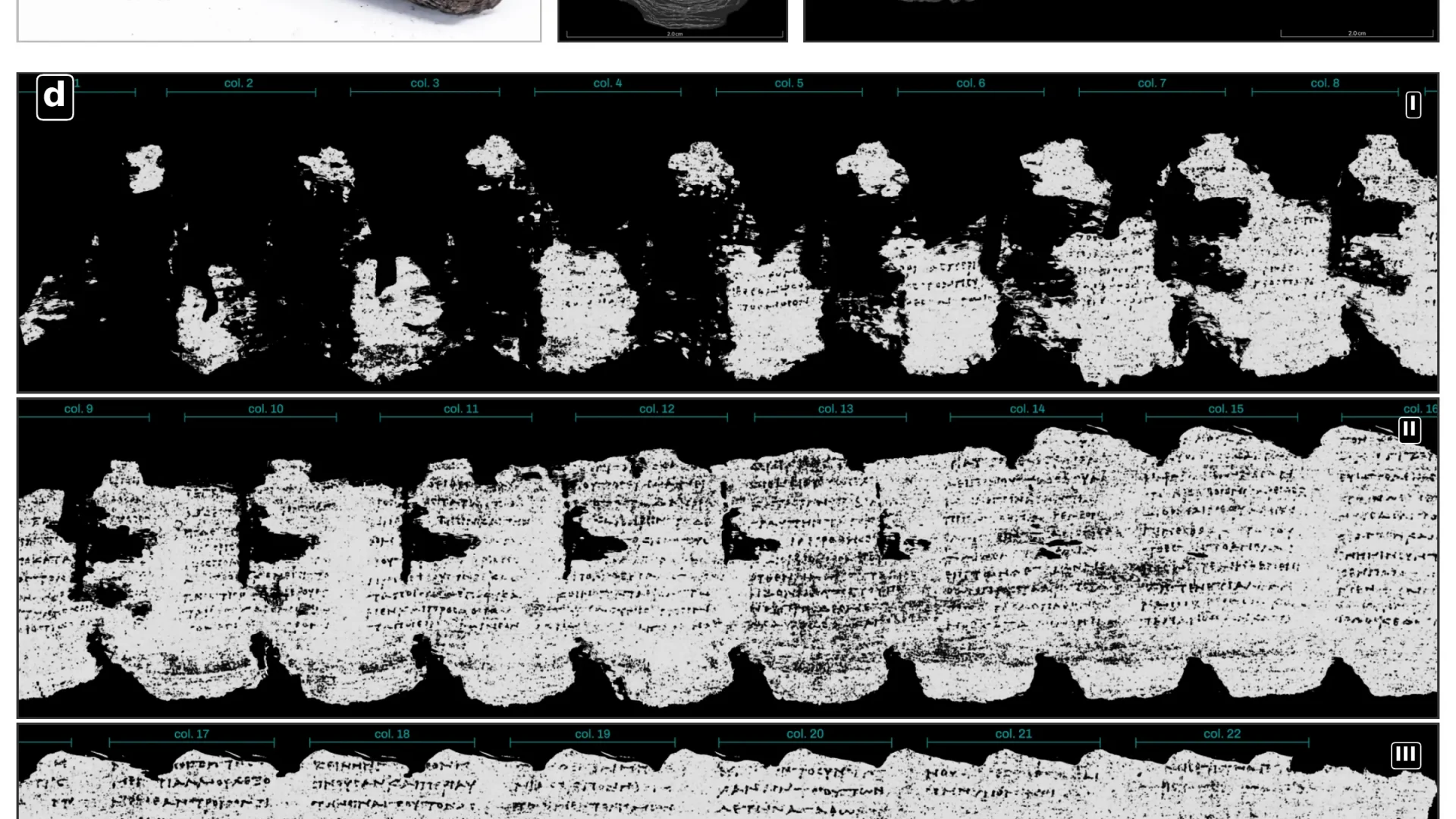
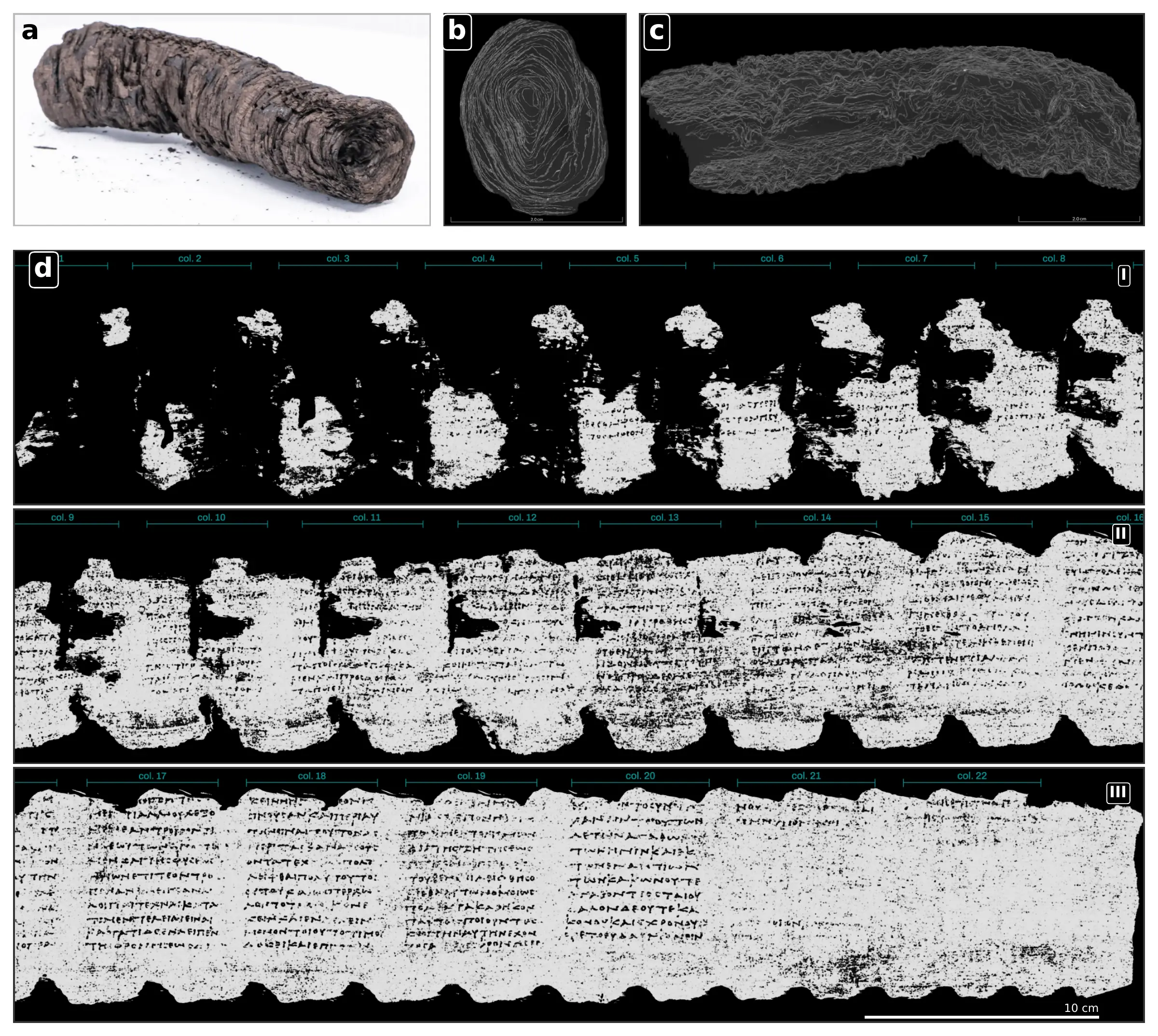
The scroll, known as PHerc. 1667, is one of the Herculaneum papyri — a library of Greek and Roman texts buried and charred by the same eruption that destroyed Pompeii. Too fragile to unroll by hand, it was imaged using high-resolution phase-contrast X-ray micro-tomography at the European Synchrotron Radiation Facility in Grenoble, France. Machine-learning models trained to detect the faint traces of carbon-based ink then revealed the writing hidden within its tightly wound layers, which papyrologists interpreted and translated into readable ancient Greek.
The recovered text — roughly 1.4 meters of writing across some 22 columns — is a philosophical treatise on ethics, believed to be a Stoic work on human nature and moral progress dating to the 2nd century BC. It is the first Herculaneum scroll to be recovered in full by these methods, opening the door to reading hundreds of others that have remained sealed for nearly two millennia.
The achievement is a striking example of the same computational techniques — large-scale imaging, machine learning, and HPC-driven analysis — that power modern research across the sciences, and that the Center for Computational Sciences supports for the University of Kentucky community.
Read the full story at CNN: Papyrus scroll burnt to a crisp during Vesuvius eruption deciphered with help of AI.
About the Center for Computational Sciences (CCS): The Center for Computational Sciences at the University of Kentucky enhances the success of faculty and staff in computational research and education by providing advanced computing resources, expertise, and training. CCS also promotes collaboration and outreach to expand access to computational technologies across the Commonwealth. Learn more at www.ccs.uky.edu.
Scroll image: © Vesuvius Challenge 2026, licensed under CC BY-NC 4.0.